

Smarter business voice
Every call, routed exactly where it should go.
TringPBX brings numbers, call routing and the voice infrastructure behind them into one layer — from a single forwarded line to SIP trunking and hosted PBX.
- 99.9% uptime
- 24/7 support
- Worldwide coverage
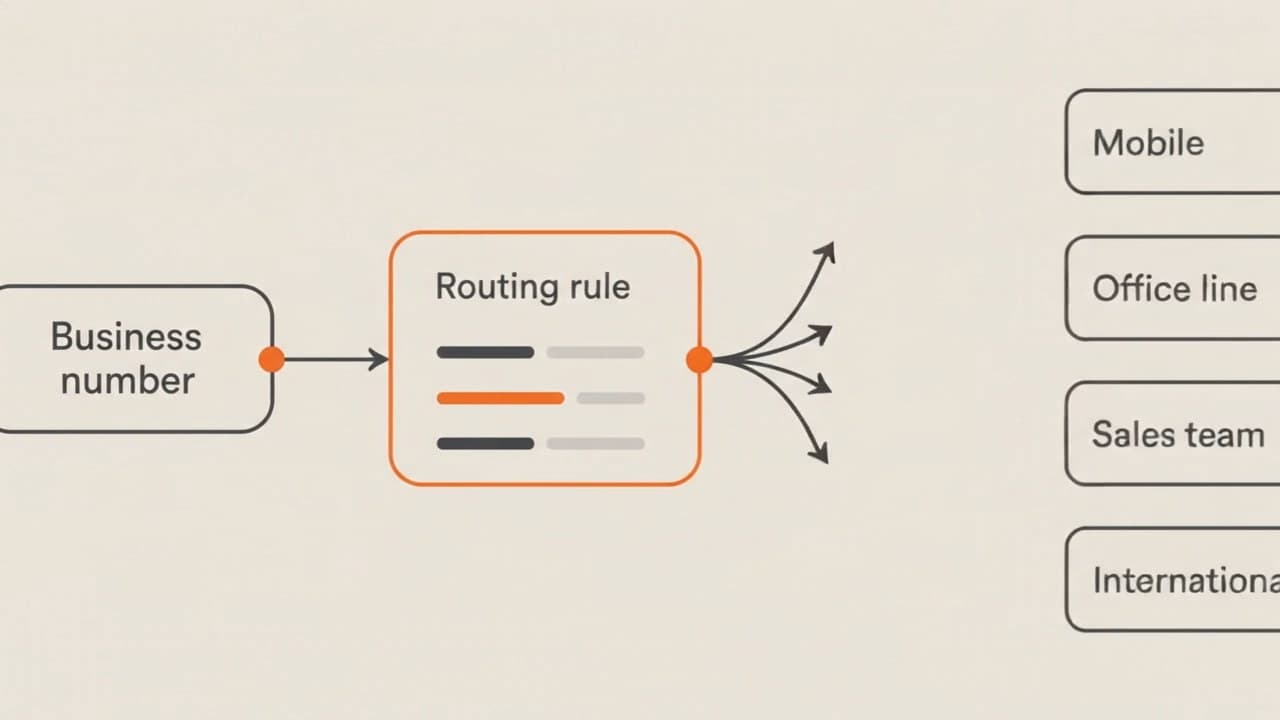
Diagram: an incoming call to a business number reaches a routing rule, which sends it on to one of several destinations — a mobile, an office line, a sales team or an international destination.
What we do
- Flexible call routing
- Numbers, worldwide
- SIP trunking and hosted PBX
- Built for distributed teams
Services
One voice layer.
Multiple ways to connect.
Choose the routing setup that matches how your customers call and how your team answers.
Virtual Numbers
Give customers a simple way to reach your business while your team answers from wherever it operates.
International Calling
Place and receive calls across borders on routes chosen for quality, not just price.
Call Forwarding
Send incoming calls to the people, teams or destinations that should receive them.
Smart Routing
Use routing rules to decide where a call should go next.
Hosted PBX
Bring extensions, teams and everyday business calling into one organized setup.
SIP Trunking
Connect the PBX or platform you already run to the public network, without the physical lines.
How it works
Your call flow, without the complexity.
Three things happen to every business call. TringPBX makes the middle one something you control.
Receive
Your customer calls the number you provide. Nothing about how they reach you changes.
Route
TringPBX applies the routing setup configured for that line — destination, schedule or rule.
Connect
The call reaches the selected person, team or endpoint, with a defined path if it is not answered.
Every route ends somewhere defined — including the calls nobody picks up.
See routing in detailThe route, written down
If you can describe the call, we can route it.
Routing gets complicated when nobody has written down what should happen. We start from a plain description of your call flow and build the route to match it.
Written in operational language
A route is a set of decisions about your business, not a configuration file you have to learn.
Every branch has an ending
Busy, unanswered and out-of-hours are designed into the route rather than discovered later.
Changes stay behind the number
When the operation changes, the route changes. What your customers dial does not.
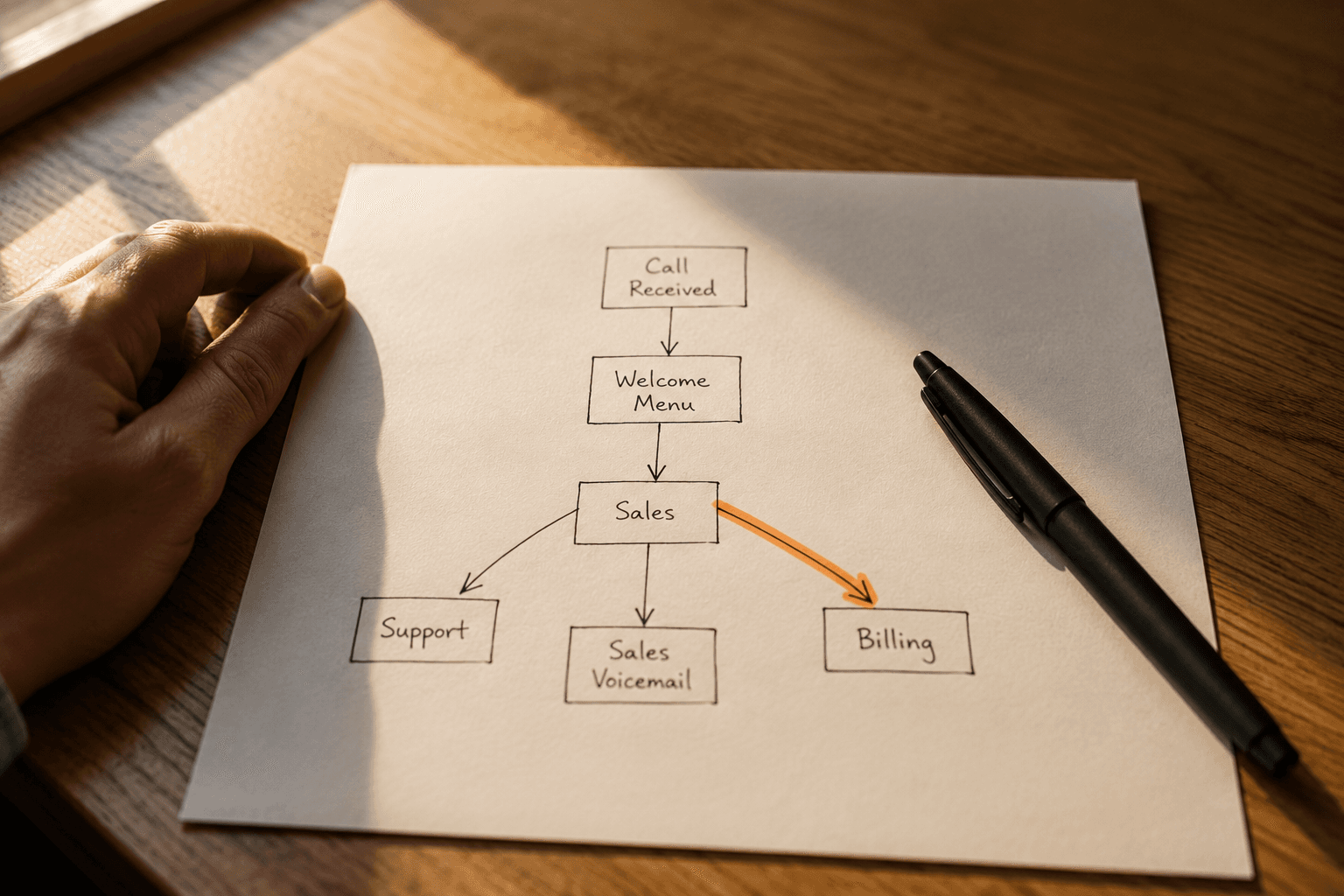 Before it is built
Route definition
Illustrative- Line
- Support · published business number
- When
- Mon–Fri, 08:00–18:00 local
- Then
- Ring group · Support (3 extensions)
- If busy
- Hold in queue, then voicemail
- Otherwise
- Out-of-hours message · callback path
An example of how a call route is described before it is built. Your route is mapped with you.
Use cases
Built around the way your business answers.
Every operation has a different shape. These are the routing problems we see most often.
International business
Customers in one market, the team answering in another — with nothing lost in between.
Read moreRemote and distributed teams
Business calls that reach people, not desks — wherever the team happens to be working.
Read moreSales teams
Inbound calls are the highest-intent leads you get. Give them the shortest path.
Read moreCustomer support
Callers who need help should reach the right team without explaining themselves twice.
Read moreVoice operations
Design routing around the operational flow of a high-volume calling environment.
Read moreCoverage
Worldwide, wherever your calls need to go.
We route internationally. Tell us the destinations, numbers and routing setup you need and we'll confirm exactly what can be provisioned for each one.
Coverage is global — availability is specific
Every country has its own number types, formats and documentation rules. We confirm what can be issued for your exact destination list rather than publishing a table that goes out of date.
Operational credibility
Voice routing should feel dependable, not complicated.
99.9% network uptime, support staffed around the clock, and call paths designed so that busy, unanswered and out-of-hours calls all end somewhere defined.
- 99.9% network uptime
- The figure is in our service level agreement, not just on this page. Ask us for it.
- Defined fallback behaviour
- Busy, unanswered and out-of-hours calls follow a path you agreed in advance.
- Number management in one place
- Customer-facing numbers and the routing behind them stay in a single, coherent setup.
- 24/7 support, every day
- Not business hours in one time zone. Voice problems do not wait for Monday, and neither do we.
Looking for service-level commitments, compliance detail or technical documentation? Ask us directly — we'd rather confirm what applies to you than publish a claim that does not.
Next step
Ready to route calls your way?
Tell us how your calls work today and where you need them to go. We will map the route with you before anything is set up.